Dressing for the Second Act: A Calm Guide to Interview Style After 50
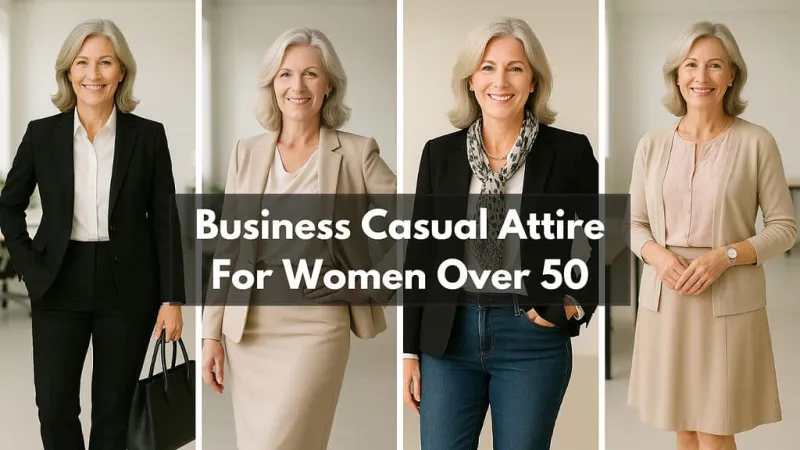
Photo: mature professional choosing outfit wardrobe mirror business casual, via alisonsnotebook.com
There was a time when the rules were simple. A navy suit, a pressed shirt, polished shoes, and you were dressed for the interview. That time has gone. Ask anyone job-hunting in their fifties today what to wear and you will often get a shrug — because the honest answer is that nobody quite knows anymore.
The shift is not about age. It is about work itself. With most UK employers now operating some form of hybrid arrangement, and entire sectors having abandoned formal dress since 2020, the visual signals that once communicated competence have become muddled. A suit can read as effortful in a start-up; trainers can read as careless in a City firm. For experienced professionals entering the jobs market after a decade or two in one organisation, the confusion is compounded by the fact that they may not have interviewed at all since their thirties.
The recruiters' verdict: context beats convention
"The single biggest mistake I see from older candidates is dressing for the interview they had twenty years ago," says one London-based recruitment director who places senior professionals across financial services. "They arrive in something formal and slightly stiff, and it sits oddly against a business that has everyone in knitwear."
Her advice is unglamorous but sound: research the specific employer, not the sector. Look at how the leadership team appears on the company website and LinkedIn. If the managing director is photographed in an open-collar shirt, a full suit and tie will make you look like an inspector rather than a colleague. If the firm advises clients on serious money, a level of polish remains expected.
Image consultants working with later-career clients put it another way. The goal, they say, is to look like someone who has made choices — not someone who is wearing a costume borrowed from a younger or older version of themselves.
On camera: what the webcam actually notices
Video interviews have their own rules, and they are less forgiving than people assume. Cameras flatten colour, compress texture and crop the frame at chest height, which means the details that matter have shifted.
Solid, mid-tone colours — sage, burgundy, steel blue, camel — generally perform better on camera than stark white or deep black, both of which can drain the face under webcam lighting. Patterns can strobe on screen. A structured collar or a well-cut jacket shoulder helps the frame read as deliberate rather than thrown together, even if you never stand up.
One practical point worth repeating: dress the whole of yourself, not just the top half. The number of candidates who have stood up mid-call wearing jogging bottoms, only to be caught out, is larger than any recruiter will admit in print.
The trade interview: a different currency
Not every second act unfolds in an office. A growing number of over-50s are moving into skilled trades, technical roles and hands-on work — often fields they once managed from the other side of the site office. Here, formal dress can actively work against you.
For these interviews, clean, practical clothing that you could plausibly work in sends the right message. Steel toe-capped boots you already own, a plain work shirt, hands that suggest you are not afraid of them getting dirty. The foreman interviewing you is reading for reliability and realism, not polish.
The boardroom comeback
At the senior end, the calculus changes again. Executive candidates returning to leadership after redundancy, consultancy or a career break are usually expected to present a degree of authority — but the modern version is more restrained than the power dressing of the 1990s. Quality over formality. A well-cut jacket in an interesting fabric. One considered detail rather than a full uniform.
The consultants we spoke to were emphatic on one point: at this level, the clothes should support the experience, not compensate for it. Nobody hiring a chief financial officer is swayed by a tie.
A statement, not a costume
There is a light-touch argument underneath all of this practical advice, and it is worth stating plainly. Dressing well in your fifties and sixties is not about disguising your age or chasing someone else's uniform. It is a quiet declaration that you have dressed yourself, on your own terms, for decades — and it shows.
The over-50 candidate who walks in — or logs on — looking comfortable, current and unmistakably themselves is making a statement that no outfit can fake and no age filter can erase. The wardrobe may be dead as a rulebook. As a form of self-expression, it is very much alive.